Scientific American-Latest Stories
"The Philippines earthquake is massive, but it could've been bigger."
Views expressed in this science and technology update are those of the reporters and correspondents. Accessed on 09 June 2026, 2201 UTC.
Content and Source: "Scientific American-Latest Stories."
URL--https://www.scientificamerican.com/latest/
Please check URL or scroll down to read your selections. Thanks for joining us today.
Russ Roberts (https://hawaiisciencemonitor.blogspot.com.
Latest Stories
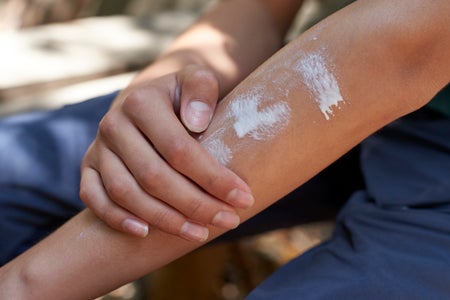
U.S. gets a new sunscreen ingredient after 27 years—here’s how it works
Dermatologists and skincare aficionados are excited for the U.S. to finally get a new, more protective sunscreen filter after more than 20 years of regulatory roadblocks. Here’s how bemotrizinol works

How math's 'hairy ball theorem' could explain bad hair days
An idea from topology explains why you can never get rid of your cowlicks—and, oddly enough, it’s critical in nuclear fusion

Americans’ trust in the CDC has plummeted since 2025, new poll finds
A mere 12 percent of Americans say they trust the U.S. Centers for Disease Control and Prevention’s recommendations “a great deal”

NASA reveals astronauts who will fly Artemis III, its next step toward a moon landing
NASA’s Artemis III crew includes three NASA astronauts and one European Space Agency astronaut

Apple’s new Siri can run your digital life. The catch is privacy
To run errands across apps, Apple’s upgraded assistant needs deep access to personal data that the company has walled off for years

Resistance training may boost longevity. But how much do you need?
Weight lifting and other forms of resistance training can increase bone density, lower diabetes risk and boost mental health
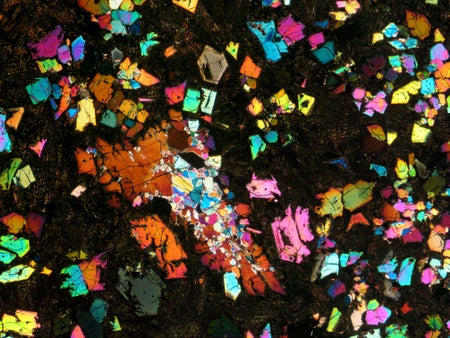
This meteorite could be a relic from a ‘lost world’
Hints of high-pressure chemistry within a rare meteorite suggest this fallen space rock comes from a planet gone wrong in the solar system’s early history
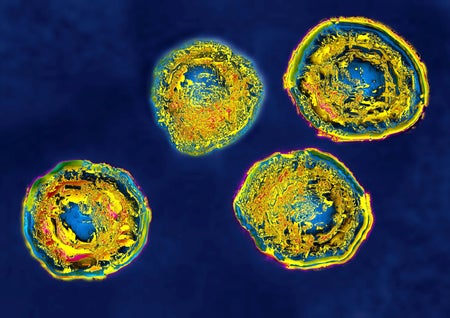
Genital herpes tests are notoriously unreliable, but better ones are in the works
The best blood test for herpes is only available at a single lab. What would it take for that to change?
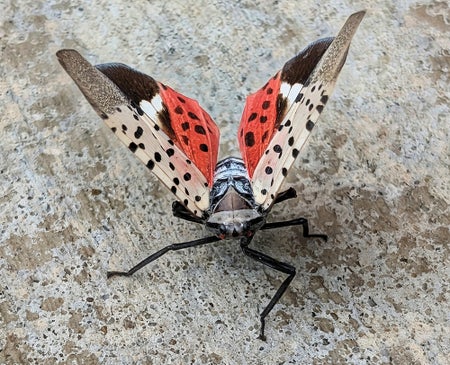
Spotted lanternflies’ love of cities may be the secret to their invasion success
These eye-catching insects offer a prime opportunity for scientists to dig deep into invasion ecology and evolutionary biology
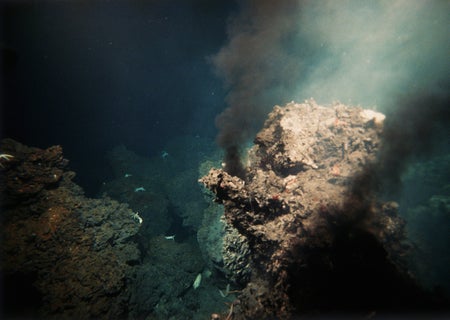
Dino-killing asteroid may have sparked millions of years of hydrothermal life
When asteroids slam into Earth, they can create hydrothermal vent systems
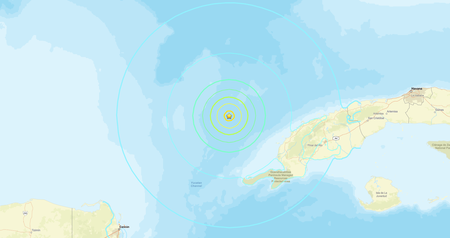
‘Odd’ Gulf of Mexico earthquake rattles Florida and Cuba
This earthquake may be among the biggest in the Gulf of Mexico’s history

The Philippines earthquake is massive, but it could’ve been bigger—here’s why
The magnitude 7.8 earthquake that hit the Philippines happened at a subduction zone. Such places are capable of producing the largest earthquakes possible

Comments
Post a Comment