Wired Science-How the Universe Works
"The data center backlash is bigger than America."
Views expressed in this science and technology update are those of the reporters and correspondents. Accessed on 26 October 2026, 2247 UTC.
Content and Source: "Wired Science-How the Universe Works."
https://mail.google.com/mail/u/0/#inbox/FMfcgzQjgghCKGqMVRKLsQMtCRcVqXvg
Please check email link or scroll down to read your selections. Thanks for joining us today.
Russ Roberts (https://hawaiisciencemonitor.blogspot.com).
|
Data centers are roughly as popular as anchovies in the US, which is to say they are rather poorly regarded by Americans. The noise pollution, the profligate water use, and the carbon-spewing gas plants powering them are among the reasons the American public has soured on the server farms. But this is hardly a case of American exceptionalism. People around the world also hate data centers, and US communities can learn a lot of lessons from how that opposition has played out. Molly Taft spoke with author and tech critic Paris Marx about his new book, Hyperscale: The Ambition and Excess of Big Tech's Data Empires, which looks at some of those lessons, including the role of climate and natural resource politics. This intersection is particularly important in the US, with midterms a little more than a week away. Voters are motivated by their dislike of data centers, but even more so, their concerns about the skyrocketing cost of living. But Marx makes the case that data centers’ resource use should be front and center for policymakers in the US and abroad. Molly asked Marx how he would change the data center build-out, and his response is one that I think Democrats, should they retake Congress, would be wise to consider: “We need to be thinking of how we do technology differently, especially in this moment where we're dedicating so many resources to the infrastructure to enable generative AI. We should be asking, how much computation do we really need? How many resources are actually justifiable to put into this project? What are we actually getting out of it, right? Does what we're getting from what Silicon Valley is creating really justify the resources that we are collectively sacrificing in order to realize it? If we actually did the assessment, I think we would very clearly find that there's no way to justify what we are doing right now—from a financial perspective, but also from a social and environmental one.” Also on my radar: Anthropic’s IPO announcement. My colleagues on WIRED’s business desk have had plenty to say already about what’s in the company’s filing, as well as the way it talks about the risks and benefits of recursive self-improvement. The science desk has even more to say. We also have a spooky season story on deck this week that I’m so excited to share with you. And WIRED has a whole week of ghost coverage, including the most terrifying thing imaginable (having a Wikipedia page and then having it deleted). Stay tuned for more! |
|

THIS WEEK’S PICKS |
| |
What the US Movement Against Data Centers Can Learn From Abroad By Molly Taft Paris Marx, author of Hyperscale, has been tracking global data center development for years. The US has a lot to learn from what’s happened everywhere from Ireland to New Zealand. | |
|

| |
A New Ice Age Was Beginning. Then Humans Started Burning Fossil Fuels By Molly Taft Ancient plants reveal that the vestiges of the North American ice sheet started expanding a few thousand years ago, but that climate change caused it to reverse course. | |
|

| |
Inside the Supermassive Debate Over the James Webb Telescope’s ‘Little Red Dots’ By Charlie Wood The Webb telescope sees tiny red dots everywhere. Astronomers can’t agree on what they are, but some believe they may be enormous stars with black holes inside. | |
|

|
| |
Scientists Trapped an Antimatter Particle for Months to Study Its Secrets By Jorge Garay These elusive and reactive particles have been challenging to hold on to and even more challenging to study, but a new method paves the way for tests on the differences between matter and antimatter. | |
|

| |
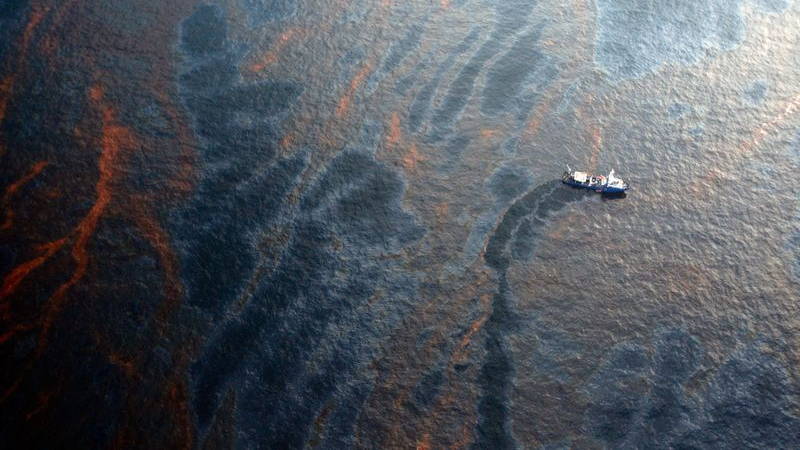
Oil Spills Wreak Havoc on the Bottom of the Ocean, Even a Decade Later By Bob Berwyn While oil is known to float, new research finds that over time it can permeate even extremely deep marine habitats, with animal populations declining by as much as 80 percent. | |
|
ELSEWHERE IN SCIENCE |
TRENDING ON WIRED |
| |
Anthropic’s IPO Prospectus Reveals What’s Under the Hood By Joel Khalili and Kate Taylor Anthropic on Monday filed documents ahead of a blockbuster IPO that offers insight into the company’s financials, risk factors, and views on the future of AI. | |
|

The Best of WIRED in Your Inbox Was this forwarded to you? Sign up. Plus, find all of our newsletters. |
This email was sent to you by WIRED. To ensure delivery to your inbox (not bulk or junk folders), Please add our email address, wired@newsletters.wired.com, to your address book.View our Privacy Policy | UnsubscribeCopyright © Condé Nast 2026. One World Trade Center, New York, NY 10007. All rights reserved. |
Comments
Post a Comment